Wimbledon
Why grass survived at one tournament and vanished almost everywhere else
Grass was once the normal surface for competitive tennis. It disappeared because of maintenance economics rather than because anybody decided it was inferior.
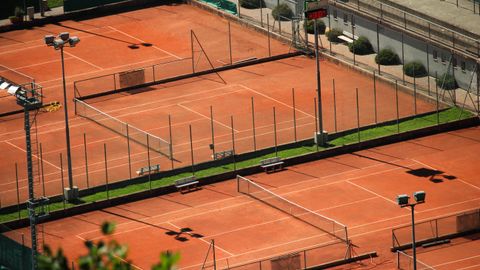
Grass was the default because it was already there
Lawn tennis was invented to be played on lawns that existed for other purposes, so the surface was chosen by availability rather than by suitability. That worked while the game was played casually by a small number of people who did not need the court to survive daily use. Competitive tennis is far harder on a surface, wearing the grass away along the baselines within a matter of days rather than months.
A tournament therefore needs many courts, a long recovery period and a permanent staff, none of which is required by a hard surface. The economics were always against grass, and they became decisive once tennis expanded beyond the clubs that had originally hosted it.
What replaced it and why
Hard courts can be played on continuously, require little more than occasional cleaning and resurfacing, and behave the same in most weather. Clay is cheaper to build than grass and needs daily attention rather than seasonal recovery, which suits climates where it can be used year round. Both alternatives allowed facilities to serve far more players per year, which matters enormously to any club trying to fund itself.
Public facilities went almost entirely to hard surfaces, so the majority of people who play tennis have never been on grass. A surface that most players never encounter cannot remain the sport's default, whatever its history.
The season that exists for one event
A short run of grass tournaments survives, and its main function is preparation for the single event that has kept the surface central. That is an unusual arrangement, in which a whole segment of a professional calendar exists to support one tournament rather than standing on its own. It creates a compressed period in which players adjust to a surface they have not used for a year, then abandon it again.
The adjustment is genuine, since movement, bounce and the reward for particular shots all differ noticeably from the surfaces used the rest of the year. Extending the season has been discussed repeatedly and runs into the same maintenance economics that removed grass everywhere else.
Why the surviving institution could afford it
Maintaining championship grass requires land, staff, equipment and the ability to leave courts unused for most of the year. Only an institution with substantial reserves and a site it owns outright can sustain that, which describes very few places in world tennis. The event's revenue makes the maintenance affordable, and the maintenance is part of what makes the event distinctive enough to generate the revenue.
That circularity is stable as long as it holds, and it explains why no comparable grass event has been established elsewhere. Tradition survives most reliably where somebody can afford it, which is less romantic than the usual explanation but more accurate.
What the surface still contributes
Grass rewards a different set of qualities from clay, favouring low bounce, quick points and a willingness to move forward. Having a surface with those properties in the calendar keeps a range of playing styles viable that a uniform tour would gradually eliminate. Sports that standardise their conditions tend to converge on a single optimal approach, which is efficient and reduces variety.
Tennis has avoided that partly by accident, retaining three quite different surfaces because none of them could be removed without a fight. The diversity is now defended deliberately, though it originally survived because nobody could agree on which surface to abandon.
- Grass requires continuous maintenance and limited play
- Hard courts spread because they are cheap to keep
- A short grass season now exists mainly for one event
Also by Aarav Sharma
- The sport of the four-year cycle: athletics between its championshipsAthletics
- The city and the state association: two maps of the same cricket countryIPL 2026
- Why football spread further than the games invented alongside itFootball
- No two grounds alike: how cricket ended up without fixed dimensionsCricket


